



SUPERSPECIALITY VS MULTISPECIALITY HOSPITAL
Confused between a superspeciality and multispeciality hospital? Learn the key differences, benefits, and when to choose the right hospital for your treatment.
By Aadicura | 18 September 2023Choosing a hospital is not always as simple as finding the nearest facility. A routine fever, serious injury, and complex heart or brain condition may each require a different level of care. This is why understanding the difference between multispeciality and superspeciality hospital matters.
A multispeciality hospital provides care across several broad medical departments. A superspeciality hospital offers advanced, highly focused treatment within specialised branches of medicine. The two can overlap. Many tertiary hospitals combine broad medical coverage with sophisticated superspeciality departments, allowing patients to move from assessment to advanced treatment within one coordinated system.
What Is a Multispeciality Hospital?
A multispeciality hospital brings several medical and surgical specialities under one roof. These may include general medicine, general surgery, orthopaedics, paediatrics, obstetrics and gynaecology, dermatology, ENT, ophthalmology and emergency care.
For patients, this model offers convenience and continuity. Someone with diabetes and joint pain, for example, may consult a physician, endocrinologist, orthopaedic specialist and physiotherapist within the same hospital. A multispeciality hospital in Vadodara may therefore be suitable for routine consultations, preventive check-ups, common surgeries, diagnostic testing and conditions involving more than one broad speciality.
Its defining feature is range. It is designed to address varied healthcare needs rather than concentrate mainly on highly complex conditions.
What Is a Superspeciality Hospital?
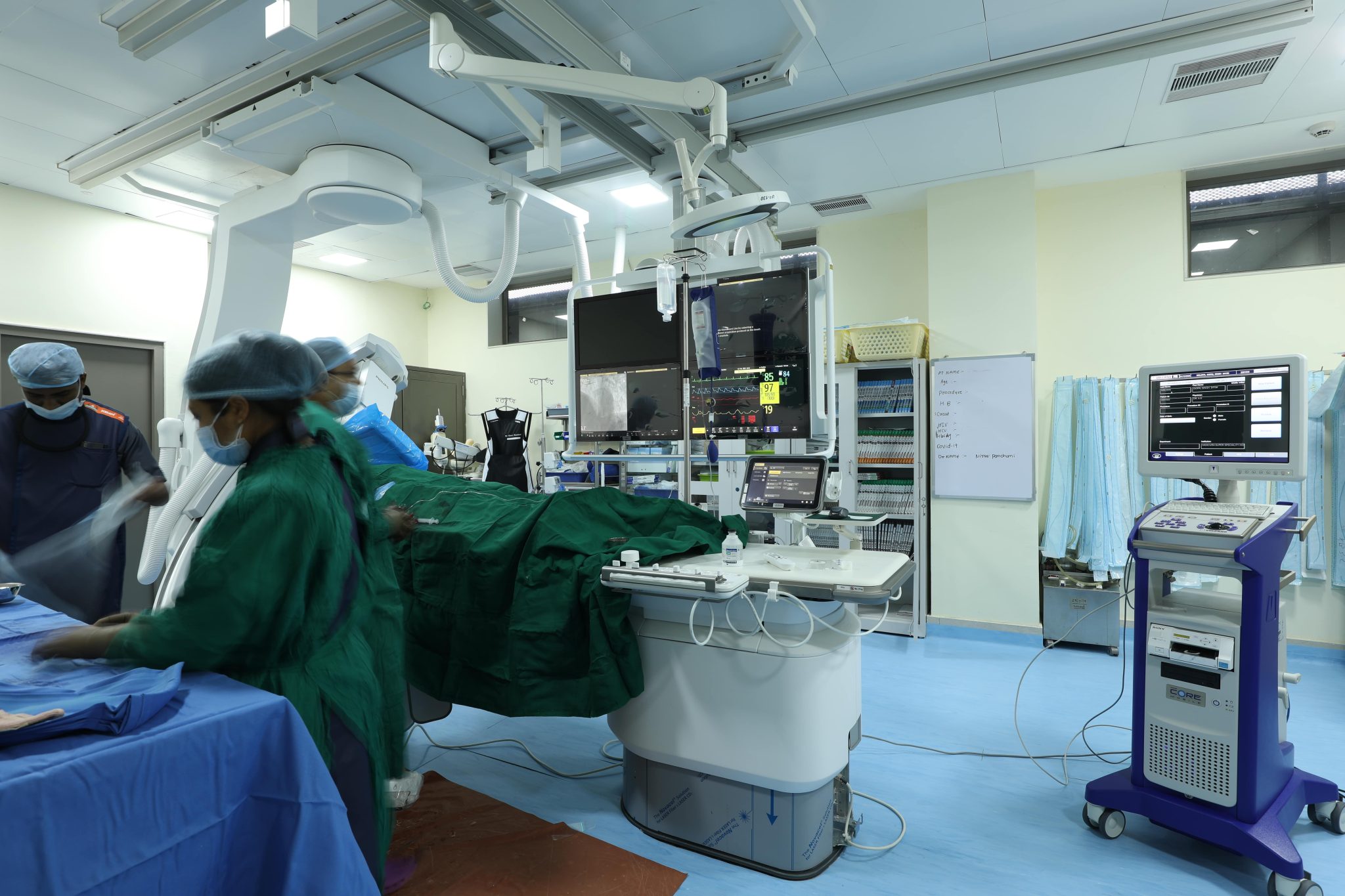
A superspeciality hospital focuses on complex conditions requiring advanced expertise, specialised infrastructure and doctors trained beyond a broad speciality. In India, recognised super-speciality medical pathways include qualifications such as DM, MCh and DrNB. DrNB, for instance, is described by the National Board of Examinations in Medical Sciences as a doctoral-level super-speciality programme offered across disciplines such as cardiology, neurology, nephrology, urology, vascular surgery and critical care.
A superspeciality hospital in Vadodara may provide interventional cardiology, cardiothoracic surgery, neurosurgery, endovascular procedures, kidney transplant care, advanced gastrointestinal surgery, joint replacement and intensive care.
The distinction is not simply the number of departments. It is the depth of expertise available within them, supported by advanced diagnostics, operation theatres, critical-care units and specialised clinical teams.
Superspeciality vs Multispeciality Hospital: Key Differences
The simplest distinction is breadth versus depth.
| Area | Multispeciality Hospital | Superspeciality Hospital |
|---|---|---|
| Primary focus | Multiple broad specialties | Advanced, highly specialised care |
| Typical needs | Routine and moderately complex conditions | Complex, high-risk or uncommon conditions |
| Doctors | Specialists from broad disciplines | Super-specialists with focused training |
| Infrastructure | General diagnostic and surgical support | Advanced procedural and critical-care support |
| Care pathway | Often an initial point of care | Often selected after referral or for advanced intervention |
A superspeciality hospital may still offer several departments and broad supportive services. Therefore, the practical question is not which label sounds better, but which hospital has the expertise, technology and facilities required for the patient’s condition.
When Should You Choose a Multispeciality Hospital?
A multispeciality hospital is generally appropriate when:
- The diagnosis is unclear, and an initial assessment is needed.
- You require routine medical, surgical or preventive care.
- Several common health concerns need evaluation.
- You need consultations, diagnostics and treatment in one location.
- The condition is stable and does not require advanced intervention.
For many everyday health needs, multispeciality care provides an efficient starting point. The treating doctor can evaluate the condition and refer the patient to a super-specialist when greater clinical expertise or a complex procedure is required.
When Should You Choose a Superspeciality Hospital?
Understanding when to choose a superspeciality hospital is important when time, precision, or access to advanced treatment could influence the care pathway.
- Consider superspeciality care when the patient:
- Has a complex heart, brain, spine, kidney, gastrointestinal or vascular condition.
- Requires a major or technically advanced procedure.
- Has multiple-organ involvement.
- Needs intensive monitoring or critical care.
- Has not improved despite earlier treatment.
- Requires transplant-related care.
- Needs an expert second opinion for a difficult diagnosis.
It may also be appropriate when a specialist recommends advanced surgery, catheter-based treatment, endovascular treatment or a minimally invasive procedure requiring specialised equipment.
During an emergency, however, go to the nearest appropriately equipped emergency department rather than delaying treatment to compare hospital categories.
Benefits of Choosing a Superspeciality Hospital
The benefits of superspeciality hospitals are most evident in complicated cases. Patients can access focused clinical expertise, advanced diagnostic tools and specialised procedures within one care environment.
Other potential advantages include:
- Faster coordination among relevant specialists.
- Detailed and personalised treatment planning.
- Dedicated intensive and critical-care support.
- Advanced surgical and minimally invasive options where appropriate.
- Structured rehabilitation after major treatment.
- Close monitoring during and after high-risk procedures.
- Better continuity between diagnosis, treatment and recovery.
When searching for the best superspeciality hospital, patients should assess the hospital’s expertise in the relevant condition, emergency capability, technology, clinical protocols, specialist availability and continuity of care rather than relying only on promotional claims.
Why Multidisciplinary Care Improves Patient Outcomes
Complex diseases rarely affect one organ or system in isolation. A patient undergoing cardiac surgery, for example, may also require support from an anaesthesiologist, intensivist, nephrologist, physiotherapist, dietitian and rehabilitation team.
This is the value of multidisciplinary care. Different experts contribute their individual knowledge while working towards one coordinated treatment plan. The National Cancer Institute similarly defines multidisciplinary treatment as an approach involving doctors and healthcare professionals from different specialities.
Collaboration can reduce fragmented decision-making, improve communication and support safer transitions from diagnosis to treatment and recovery. Research has associated multidisciplinary hospital teams with improved outcomes, fewer adverse events and greater patient satisfaction. WHO guidance also emphasises that integrated, people-centred care can improve coordination, clinical outcomes, efficiency and the overall patient experience.
The benefit, however, depends on genuine collaboration. Simply having several specialists in the same building is not enough. They must communicate clearly, review the patient’s complete health profile and align their recommendations.
Why Choose Aadicura Hospital?
Aadicura Hospital combines broad medical access with tertiary superspeciality care in Vadodara. Its official service profile lists more than 14 super-specialities, including cardiology, cardiothoracic surgery, neurology, neurosurgery, nephrology and kidney transplant care, gastroenterology, gastrointestinal and minimal-access surgery, orthopaedics and joint replacement, pulmonology, urology, vascular and endovascular surgery, ophthalmology, endocrinology, rehabilitation, and emergency and critical care.
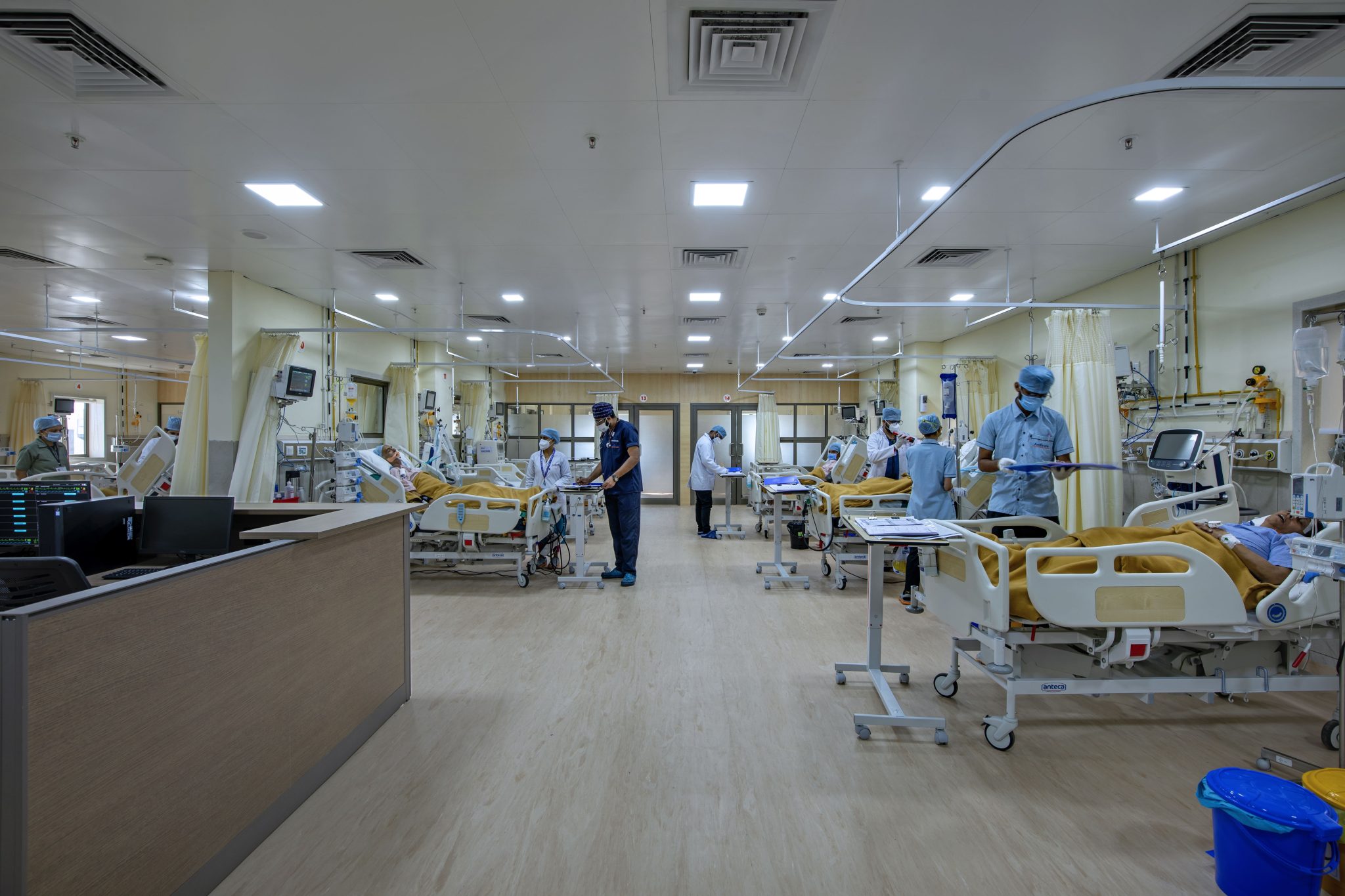
The hospital also states that its emergency room operates 24×7. Its critical-care department is supported by a 30-bed ICU, modern monitoring and ventilation systems, and access to multiple superspeciality departments for patients with complex or multi-organ conditions.
For patients seeking advanced healthcare services, this integrated setup can support continuity across:
- Specialist consultation and clinical evaluation.
- Diagnostic testing and imaging.
- Medical or surgical intervention.
- Emergency and intensive care.
- Physiotherapy and rehabilitation.
- Follow-up and long-term condition management.
Instead of treating an isolated symptom, coordinated specialists can evaluate how the condition and its treatment may affect the patient’s overall health.
Conclusion
A multispeciality hospital offers breadth, making it suitable for diverse and commonly encountered healthcare needs. A superspeciality hospital adds greater clinical depth for complex diseases, high-risk procedures and advanced interventions. In practice, a tertiary hospital may provide both.
The right choice depends on the urgency of the situation, complexity of the condition, specialist required, and hospital’s ability to provide coordinated care. A routine condition may be managed effectively within a multispeciality setting, while a complex diagnosis or advanced procedure may require superspeciality expertise.
When uncertain, begin with a qualified doctor or an appropriately equipped emergency department and follow the recommended referral pathway.
Frequently Asked Questions
When should I visit a superspeciality hospital?
Visit one for a complex or high-risk condition, an advanced procedure, intensive care, transplant-related treatment, a specialist second opinion, or when referred by another doctor.
Is a superspeciality hospital better than a multispeciality hospital?
Not in every situation. A multispeciality hospital may be ideal for routine or broad healthcare needs, while a superspeciality hospital is more suitable for complex treatment. The better choice is the hospital equipped for the patient’s specific condition.
Can I get emergency treatment at a superspeciality hospital?
Yes, provided the hospital has a functioning emergency department, trained emergency teams and critical-care support. The term “superspeciality” alone does not guarantee these facilities, so patients should verify the hospital’s emergency capabilities.
What conditions are treated at a superspeciality hospital?
Depending on its departments, it may treat complex cardiac, neurological, kidney, gastrointestinal, vascular, urological, respiratory, orthopaedic and critical-care conditions.
Why is multidisciplinary care important for complex diseases?
It enables specialists from different fields to consider the patient’s complete health profile, coordinate treatment decisions, manage risks and create a connected plan covering diagnosis, treatment, rehabilitation and recovery.
Share





We Believe in Affordable Healthcare for All
 Request an Appointment